Decoding Recurring Payments: Essential Payment Gateway Features for Subscription-Based Ecommerce
Decoding Recurring Payments: Essential Payment Gateway Features for Subscription-Based Ecommerce
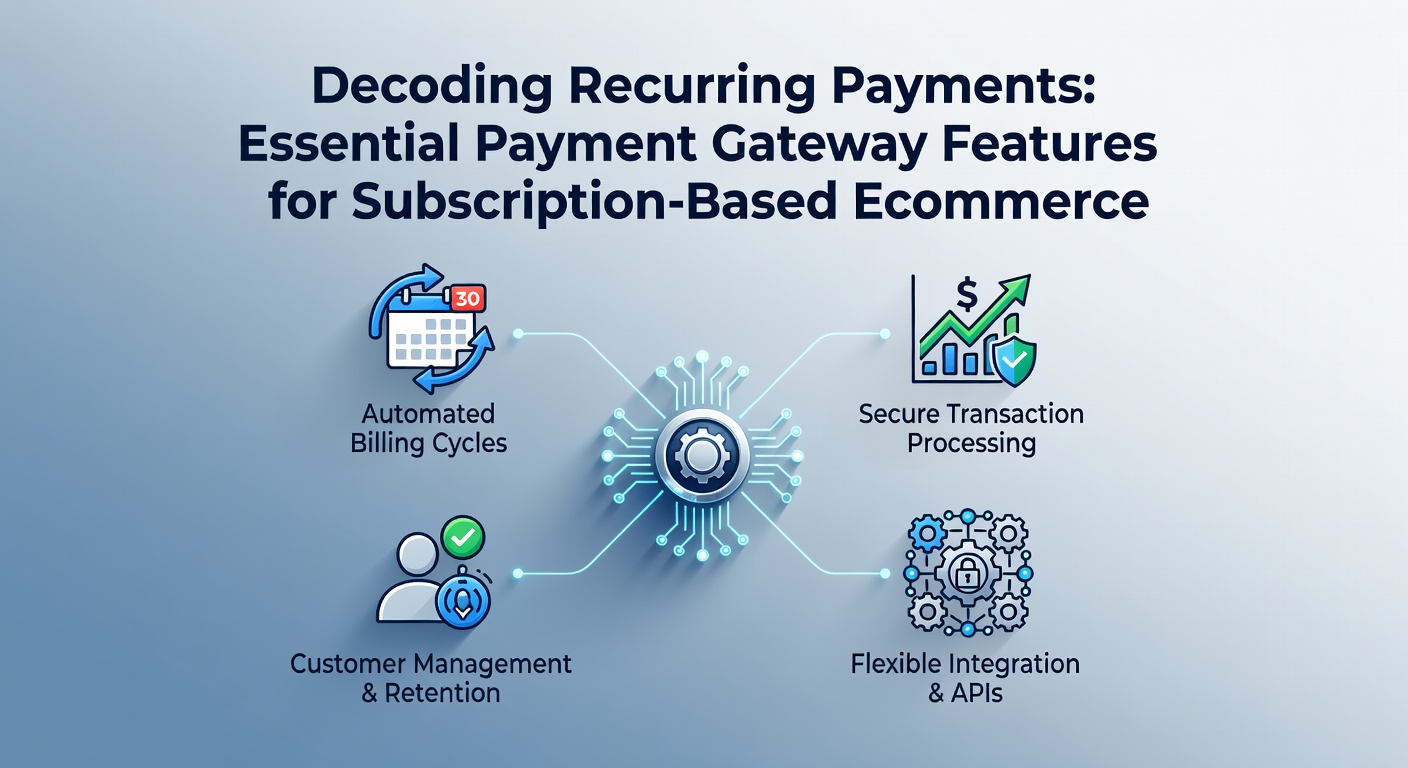
The Rise of Subscription Models in Ecommerce
Subscription-based ecommerce has exploded in recent years, with businesses from streaming services to meal kits relying on recurring payments to fuel steady revenue streams; data from Statista reveals that global subscription economy revenue hit $650 billion in 2023, and projections point to it doubling by 2028, driven largely by consumer demand for convenience and predictability. Those who run these models know recurring payments form the backbone, automating charges while customers enjoy uninterrupted access, but the real challenge lies in selecting payment gateways equipped to handle the nuances of ongoing billing without hiccups.
Turns out, not all gateways treat subscriptions equally; some falter on retries or compliance, leading to churn rates that can climb as high as 40% according to a U.S. Federal Trade Commission report on subscription pitfalls, where failed payments and poor management erode trust. Experts observe that gateways with robust recurring features keep authorization rates above 90%, turning potential losses into retained revenue, and that's where decoding the essentials becomes crucial for ecommerce operators navigating this landscape.
Core Mechanics of Recurring Payments
Recurring payments operate through tokenized customer data stored securely post-initial authorization, allowing merchants to initiate charges on predefined schedules—weekly, monthly, or custom intervals—without repeatedly prompting for card details; this process hinges on protocols like those outlined by the PCI Security Standards Council, ensuring sensitive information never touches merchant servers directly. Observers note how this setup minimizes friction, yet it demands gateways that support variable billing amounts, proration for mid-cycle changes, and graceful handling of trial periods that convert seamlessly to paid subs.
But here's the thing: simple one-off processing won't cut it; gateways must vault payment methods indefinitely, supporting updates when cards expire or banks issue new numbers, a feature that research from Subscription Insider indicates prevents up to 25% of involuntary churn. People who've scaled subscription businesses often discover that integrating webhooks for real-time notifications—alerting on successes, failures, or refunds—keeps operations humming, while lacking these leads to blind spots in cash flow.
Must-Have Features for Subscription Success
Tokenization stands out as non-negotiable, converting card data into unique identifiers that gateways use for future transactions, thereby slashing PCI compliance burdens and fraud risks; studies show tokenized payments reduce chargeback rates by 60-80% compared to non-tokenized ones. Coupled with this, smart retry logic automates attempts on declined transactions—say, retrying after 3 days, then 7, with exponential backoff—recovering 20-30% of would-be failures, as data from recurring payment benchmarks confirms.
Dunning Management and Customer Communication
Dunning tools take recovery further, triggering personalized emails or SMS when payments fail—explaining issues like insufficient funds, prompting card updates via secure links, and even offering one-click resolutions; platforms with built-in sequences boast recovery rates exceeding 50%, per industry analyses. What's interesting is how these features integrate with customer relationship management systems, allowing segmented retries based on customer history, so high-value subs get VIP treatment while casual ones follow standard flows.
Flexible Billing Cycles and Customization
Subscriptions aren't cookie-cutter; gateways excel when they handle metered billing—charging based on usage like API calls or data consumed—alongside fixed plans, supporting upgrades, downgrades, and pauses without manual intervention. And for global reach, multi-currency support with localized pricing prevents conversion headaches, especially as cross-border subs grow 15% annually according to ecommerce trend reports.
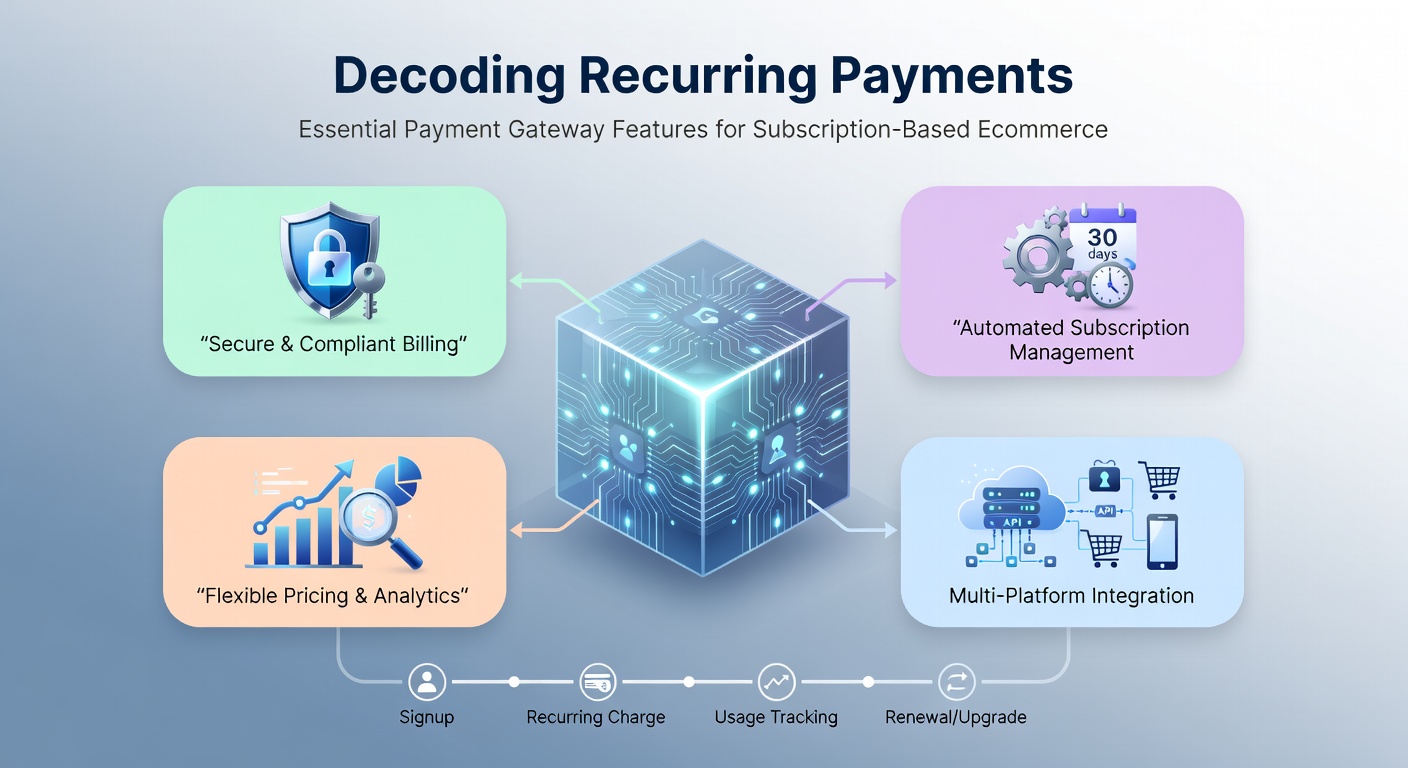
Compliance layers add another critical dimension; Strong Customer Authentication (SCA) under EU regulations mandates biometric or two-factor checks for recurring initial payments, with subsequent ones exempted if merchants register merchant-initiated transactions (MITs) properly—yet missteps here spike declines by 13%, figures from European payment studies reveal. Now, looking ahead to April 2026, enhanced PSD3 directives in the EU will tighten these rules further, requiring dynamic linking for all recurring series and pushing gateways to evolve with real-time 3D Secure 2.1 protocols, a shift Australian regulators via the ACCC are mirroring to curb subscription traps down under.
Navigating Common Pitfalls in Recurring Setups
Failed payments top the list of headaches, often stemming from expired cards or bank flags, but gateways with predictive analytics—flagging risky profiles pre-charge—cut these by 15-20%, as case studies from SaaS providers demonstrate. Take one subscription box company that integrated advanced fraud detection; their decline rates dropped from 12% to 4% within months, revenue stabilizing as a result, because the gateway's machine learning models assessed velocity and anomalies in real time.
Churn from billing surprises hits hard too; transparent features like preview invoices sent 48 hours early, coupled with easy cancellation portals mandated by laws like California's Automatic Renewal Law, build loyalty—research indicates such practices lower voluntary churn by 10-15%. Yet, scaling globally introduces tax headaches; gateways that automate VAT/MOTO compliance for EU sales or GST calculations for Canadian merchants (via Payments Canada's frameworks) save hours, preventing costly audits.
So, while basic gateways process payments, those tuned for subs offer analytics dashboards tracking lifetime value, cohort retention, and MRR growth—metrics that reveal patterns like seasonal dips, empowering data-driven tweaks. There's this case where a fitness app operator spotted 30% churn in Q4 through gateway reports, traced it to holiday budget strains, and rolled out pause options, boosting retention overnight.
Integration and Scalability Considerations
Seamless API integrations matter immensely; gateways with RESTful endpoints and SDKs for platforms like Shopify, WooCommerce, or custom stacks enable plug-and-play recurring setups, often live in days rather than weeks. Developers appreciate webhook reliability—99.99% uptime standards ensure no missed events—while enterprise-grade ones scale to millions of transactions monthly without latency spikes.
Security weaves through everything; end-to-end encryption, plus features like network tokenization from Visa and Mastercard, future-proofs against breaches, with zero-liability shifts to issuers for authenticated disputes. And for customer-facing polish, hosted payment pages branded to match merchant sites reduce abandonment, as A/B tests consistently show 5-10% uplift in conversion.
Observers point out how cost structures align with subs too; tiered fees dropping for high-volume recurring—say, 2.5% + $0.20 per successful charge—make economic sense, especially when bundled with value-adds like instant payouts or virtual terminals for hybrid models.
Conclusion
Mastering recurring payments boils down to gateways packing tokenization, dunning smarts, flexible billing, ironclad compliance, and analytics into one reliable engine; businesses that prioritize these see authorization rates soar past 95%, churn plummet, and revenue predictably climb, as evidenced across thousands of subscription deployments worldwide. With regulatory horizons like April 2026's PSD3 updates looming in Europe and parallels emerging elsewhere, those who adapt early—vetting gateways for forward compatibility—position themselves ahead of the curve, turning the complexity of ongoing billing into a competitive edge that sustains growth long-term.
Ultimately, the right features don't just process payments; they orchestrate customer journeys, recover revenue silently in the background, and scale effortlessly as subs multiply—essential tools for any ecommerce venture betting on recurrence.