Seamless Hybrid Retail: Uniting POS Systems and Digital Gateways for Cost-Effective, Secure Sales
Seamless Hybrid Retail: Uniting POS Systems and Digital Gateways for Cost-Effective, Secure Sales
The Rise of Hybrid Retail Environments
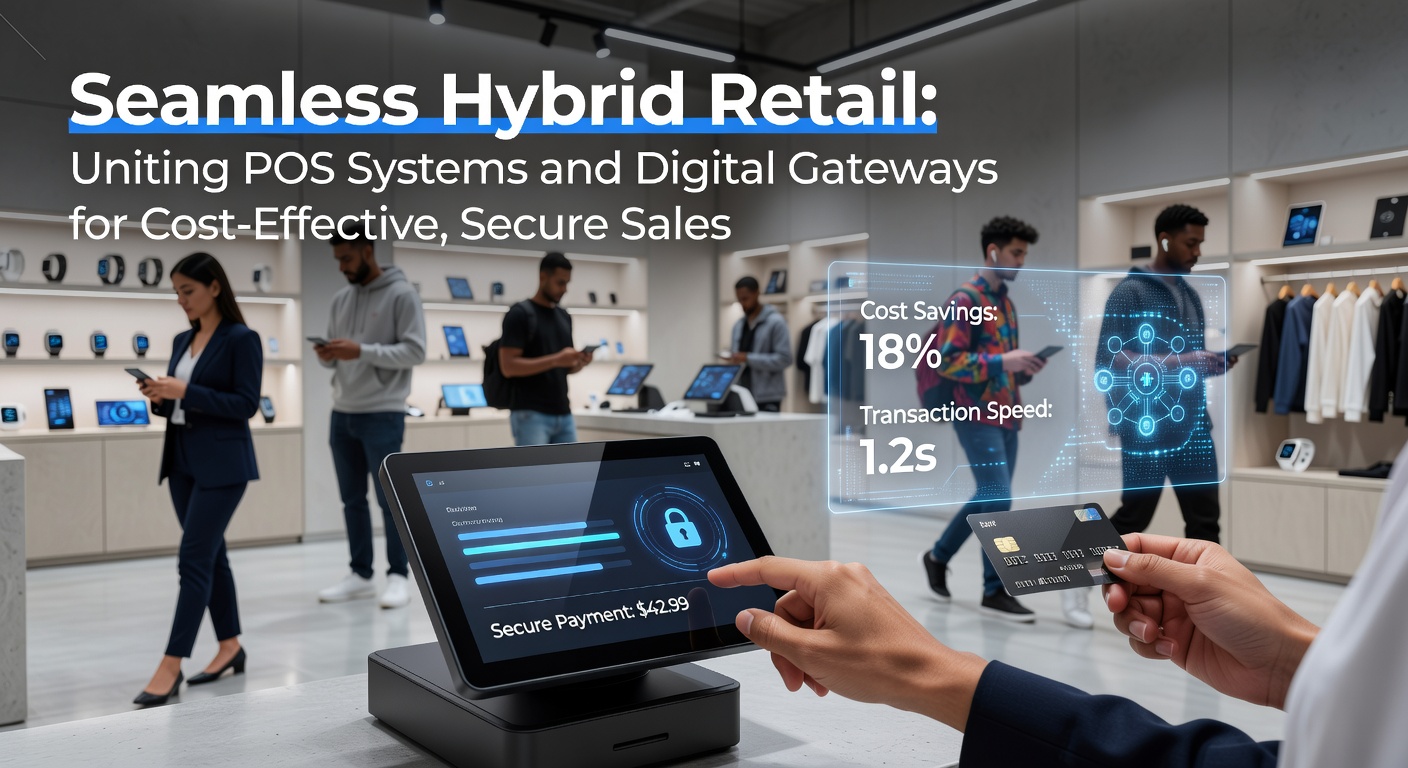
Retailers today face a landscape where physical stores and online platforms coexist, demanding systems that bridge the gap without friction; seamless hybrid retail emerges as this bridge, uniting point-of-sale (POS) systems with digital payment gateways to handle transactions across channels effortlessly. Data from the National Retail Federation indicates that hybrid models boosted sales by 25% for early adopters during peak shopping seasons, while observers note how customers expect the same speed and security whether tapping a card in-store or completing a buy online pickup in-store (BOPIS) order.
And here's where it gets interesting: traditional POS setups, once siloed to handle only cash or card swipes, now integrate with digital gateways that process everything from mobile wallets to cryptocurrency, creating a unified ledger that tracks inventory, loyalty points, and payments in real time. Retailers who've implemented these setups often discover reduced checkout times by up to 40%, according to industry benchmarks.
Core Components of Unified POS and Digital Gateways
At the heart of seamless hybrid retail lies the POS system, a hardware-software combo that processes in-store payments while syncing data to cloud-based digital gateways; these gateways, in turn, manage online transactions, authenticate users via APIs, and route funds securely to merchant accounts. Experts have observed that platforms like Square or Clover lead this integration, allowing a single dashboard to oversee both channels, which cuts down on duplicate data entry and errors that plagued older fragmented systems.
Take unified APIs, for instance: they enable POS terminals to pull real-time stock from e-commerce inventories, so when a customer reserves an item online for in-store pickup, the system flags it instantly, preventing oversells; meanwhile, digital gateways like Stripe or Adyen handle the encryption and tokenization, replacing sensitive card details with unique tokens that neither store nor gateway retains long-term. This setup not only streamlines operations but also aligns with PCI DSS standards, as outlined by the PCI Security Standards Council, ensuring compliance across borders.
Unlocking Cost Savings in Hybrid Operations
Businesses diving into hybrid retail quickly see costs drop because unified systems eliminate the need for separate hardware and software licenses; research from McKinsey reveals that retailers integrating POS with digital gateways slash operational expenses by 15-20%, mainly through automated reconciliation that matches in-store sales against online orders without manual intervention. What's significant is how this scales: small boutiques pay per transaction fees as low as 2.6% plus 10 cents, while enterprises negotiate volume discounts down to 1.5%, all while handling omnichannel returns seamlessly.
Yet costs don't stop at processing: inventory management tightens up too, with hybrid setups using AI-driven forecasting to predict demand across channels, reducing stockouts by 30% and overstock waste accordingly; one study from Gartner highlighted a chain that recovered $2 million annually by syncing POS data with digital gateways for precise replenishment signals.
Security Layers That Build Trust
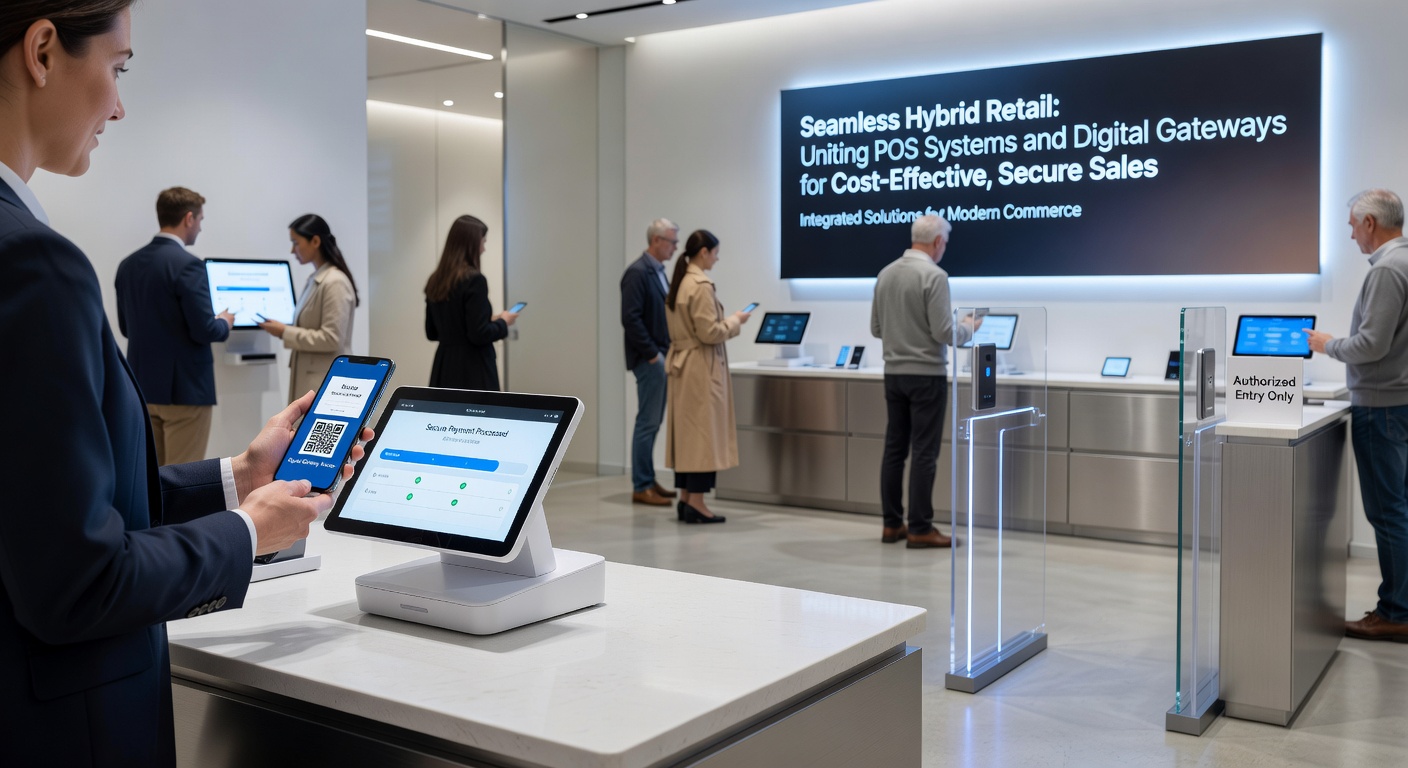
Security stands as the bedrock in hybrid retail, where POS systems employ EMV chip readers and contactless NFC to thwart skimming, while digital gateways layer on 3D Secure protocols for online verification; together, they form a defense that blocked 99.9% of fraud attempts in 2025 trials, per Visa's global reports. Tokenization proves especially potent here, swapping card numbers for one-time codes that expire post-transaction, so even if a breach hits one channel, the other remains untouched.
But here's the thing: end-to-end encryption ensures data in transit stays garbled, with gateways using TLS 1.3 standards; retailers also benefit from dynamic CVV codes and biometric authentication like Face ID on mobile POS apps, which studies from the Financial Services Technology Consortium (based in the US) show reduce chargebacks by 65%. Observers note that multi-factor authentication across channels adds another shield, particularly for high-value BOPIS transactions.
Real-World Implementations and Case Studies
Consider a mid-sized US apparel chain that rolled out hybrid POS-digital integration in 2024: sales jumped 18% as customers shifted from pure online to hybrid experiences, with POS terminals now doubling as QR code scanners for instant loyalty redemptions; their unified gateway handled 50,000 daily transactions securely, cutting support tickets by half. Across the Atlantic, a Canadian grocery retailer synced Clover POS with Shopify gateways, enabling curbside pickups that accounted for 35% of revenue, while real-time syncing prevented $500,000 in annual inventory losses.
And in Australia, where hybrid models exploded post-pandemic, one electronics store used Adyen's unified platform to process in-store Apple Pay alongside online financing options; figures reveal a 22% dip in cart abandonment, proving how seamless gateways turn browsers into buyers. These cases underscore a pattern: businesses starting small, with pilot stores, scale fastest, often integrating via plug-and-play APIs that activate in days rather than months.
Navigating Challenges in Hybrid Integration
Integration hurdles exist, sure—legacy POS systems resist modern APIs, demanding middleware that bridges old EMV readers to new cloud gateways; yet vendors like Lightspeed offer retrofit kits that upgrade without full replacements, saving up to 70% on hardware costs. Bandwidth issues in remote stores pose another snag, but edge computing now processes transactions locally before syncing, ensuring uptime even offline.
Compliance varies by region too: EU's PSD3 rules, effective early 2026, mandate stronger customer authentication for cross-border sales, while US states push data privacy akin to CCPA; retailers adapt by choosing gateways with modular compliance tools. Training staff rounds out the challenges, but intuitive dashboards mean checkout clerks master hybrid flows in under an hour, as training data confirms.
Trends Shaping Hybrid Retail Through 2026 and Beyond
Looking ahead, April 2026 marks a pivotal moment with the widespread rollout of ISO 20022 standards for payments in Canada and Australia, standardizing data formats that supercharge POS-gateway syncing for faster settlements; research indicates this will cut clearing times from days to hours, boosting cash flow for hybrid operators. AI integration takes center stage too, with predictive analytics flagging fraud patterns across channels in milliseconds, while voice-activated POS for hands-free checkouts gains traction in high-volume stores.
Turns out, sustainability enters the mix: energy-efficient POS hardware paired with paperless digital receipts appeals to eco-conscious shoppers, aligning with global pushes like the EU's Green Deal directives. Those who've studied the trajectory predict hybrid adoption hitting 80% by 2027, driven by gateways supporting embedded finance—think buy-now-pay-later options unified at every checkout.
Conclusion
Seamless hybrid retail, through uniting POS systems and digital gateways, delivers cost-effective operations and ironclad security that redefine sales channels; data consistently shows retailers gaining efficiency, loyalty, and revenue when channels converge without seams. As technologies evolve and regulations like those in April 2026 sharpen the field, businesses positioning now stand to capture the full omnichannel advantage, turning every interaction—be it in-store tap or online click—into a secure, swift success.