Specialized Network Configurations Enabling Rapid Authorization in Cross-Platform Retail Environments

Retail operations that span physical terminals and digital storefronts require network setups designed specifically to shorten the time between transaction initiation and approval, and these configurations rely on a combination of dedicated routing paths, protocol optimizations, and distributed processing nodes that together reduce latency while maintaining security standards.
Payment authorization involves multiple verification steps that include card data validation, fraud checks, and funds availability confirmation, so network architects focus on minimizing hops between point-of-sale devices, cloud gateways, and acquirer servers through techniques such as anycast addressing and software-defined wide area networks.
Core Elements of Rapid Authorization Networks
Specialized setups often incorporate multiprotocol label switching alongside edge computing clusters positioned near major retail hubs, which allows transaction packets to bypass congested public internet routes and reach authorization endpoints in under 200 milliseconds in many documented cases. Observers note that these networks frequently employ quality-of-service policies that prioritize payment traffic over general data flows, ensuring consistent performance even during peak sales periods.
Data from the PCI Security Standards Council shows that organizations implementing tokenized transmission over private links experience fewer authorization declines tied to timeout errors compared with standard broadband connections. Retailers operating across regions further integrate 5G small-cell networks at store locations to support mobile point-of-sale units, creating redundant pathways that maintain authorization speed when primary circuits experience degradation.
Integration Across Physical and Digital Channels
Cross-platform environments demand unified session management where a single customer profile can trigger authorizations whether the purchase occurs at a countertop terminal or through a mobile application. Network engineers achieve this by deploying centralized policy engines that synchronize device certificates and routing rules across both environments, reducing the need for separate authentication sequences.
Studies from the Reserve Bank of Australia indicate that hybrid retailers using these synchronized configurations process mixed-channel transactions with authorization times averaging 35 percent lower than those relying on fragmented legacy networks. The same reports highlight that such systems incorporate real-time telemetry feeds that alert operators to emerging bottlenecks before they affect approval rates.
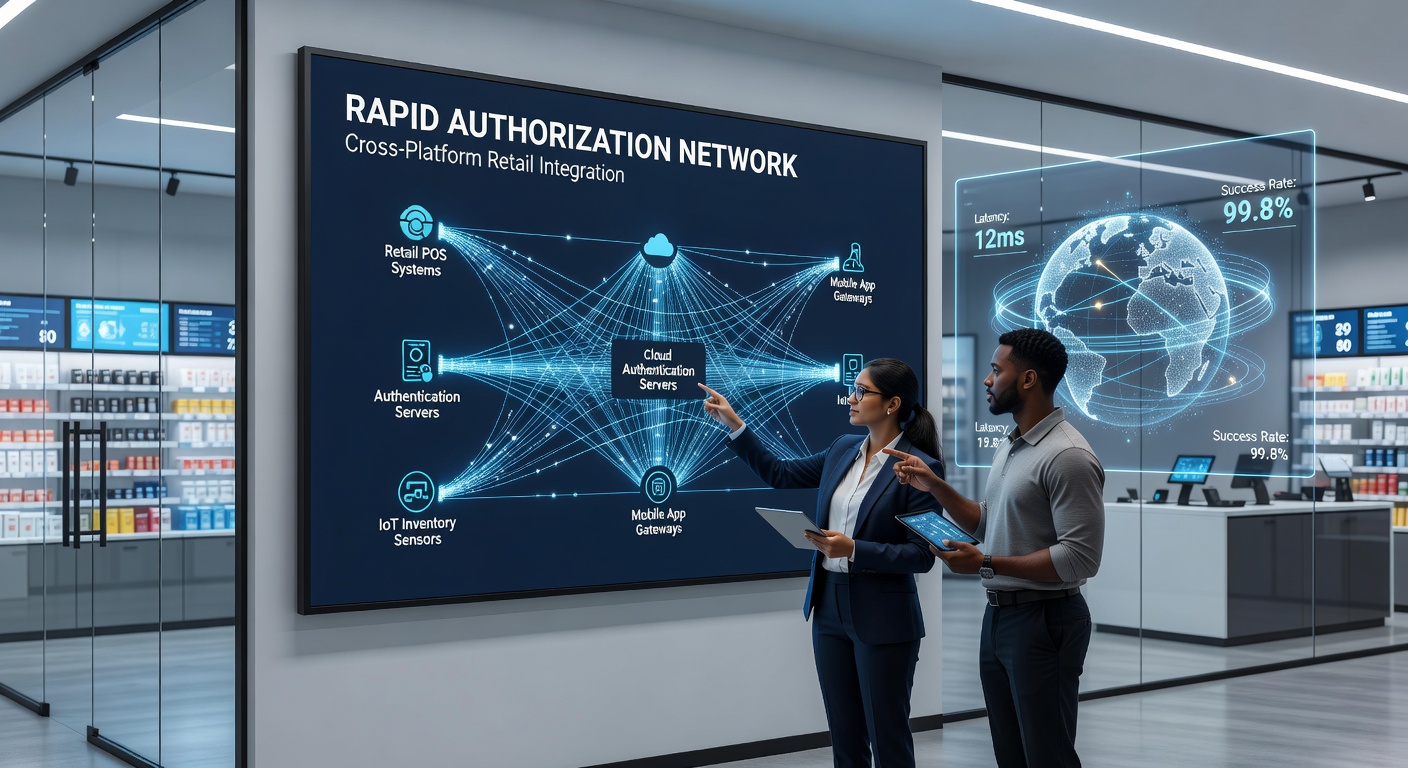
One documented implementation involved a national chain that deployed segment-routing overlays connecting in-store terminals directly to processor data centers in multiple continents. This architecture eliminated intermediate proxy servers and enabled simultaneous authorization requests from both physical and online channels without creating contention on shared bandwidth.
Security and Compliance Considerations
Network segmentation remains essential because rapid authorization must not compromise cardholder data protection. Configurations typically isolate payment traffic within virtual private clouds that enforce micro-segmentation rules, limiting lateral movement opportunities while still permitting low-latency access to external authorization services. Researchers tracking adoption trends have recorded increased use of post-quantum encryption algorithms within these segments ahead of anticipated regulatory updates expected in June 2026.
Industry analyses further reveal that continuous compliance monitoring integrated into the network fabric allows automatic rerouting of transactions through alternate paths when any segment falls out of alignment with current standards. This approach has proven effective for chains maintaining operations in both North American and European markets where differing data residency requirements apply.
Performance Metrics and Scaling Approaches
Retail networks built for speed track authorization success rates alongside round-trip times as primary key performance indicators. Operators commonly report that adding intelligent traffic steering based on historical authorization patterns improves overall throughput without requiring proportional increases in bandwidth capacity. In environments experiencing seasonal spikes, dynamic capacity allocation through cloud interconnects prevents queue buildup at authorization endpoints.
Case examples from multi-channel operators demonstrate that these specialized configurations support transaction volumes exceeding 10,000 per minute during promotional events while keeping average authorization latency below 150 milliseconds. The underlying routing logic adapts in real time to processor response variations across geographic zones, maintaining service levels regardless of origin point.
Conclusion
Specialized network configurations continue to evolve as cross-platform retail expands, with emphasis on combining low-latency routing, robust segmentation, and adaptive scaling to sustain rapid authorization across diverse transaction channels. These setups deliver measurable improvements in approval speed and reliability when properly aligned with security mandates and regional compliance frameworks.